10 things that people in Austria are proud of…

A beautiful spot in the heart of Europe, now home to 8.7 million people, where kangaroos can only be seen in zoos (contrary to popular belief). Yes, we're talking about Austria. We'll now introduce you to 10 things that make our country so beautiful and, above all, so special – things that Austrians are proud of. While we may be small and often seen as "the other Germany," there are quite a few things we're internationally known for and (quite deservedly) very proud of.

1.) Land of mountains, land by the river
Whether summer or winter, the Austrian landscape always has something to offer everyone. You could almost think the lakes and mountains are engaged in a veritable race to be the most beautiful spots in the entire country. While we have several hiking and skiing paradises with peaks over 3,000 meters high, such as the Großglockner, the Großvenediger, the Wildspitze, and others, the most beautiful swimming spots in summer also leave us in awe. The Green Lake, Reedsee, and Attersee – they all provide a spectacular natural backdrop that not only invites you to swim and relax but is also perfect for walks in the surrounding area and picnics.

2.) Musicians of the past
A tribute to the great heroes of classical music, most of whom passed away some time ago, yet whose music continues to touch and entertain us years – and in some cases centuries – later. First and foremost, I would mention the masters of Viennese Classicism – Joseph Haydn, Wolfgang Amadeus Mozart, and Ludwig van Beethoven (yes, not Austrian, but he spent several years of creative work here and ultimately found his final resting place in Vienna's Central Cemetery). Nevertheless, I would also like to highlight musicians, or rather a genre of music, that achieved worldwide success, particularly in the 1980s: Austropop. Our first German-language rapper, Falco, had several international hits, and the groups EAV and STS also stormed the charts worldwide.

3.) Bring the sparkling wine (and the beer)
With 22 white and 13 red grape varieties, it's only fitting that we bestow upon ourselves the title "Wine Country Austria." For centuries, wine has been cultivated in Lower Austria, Burgenland, Vienna, and Styria, delighting the palates of wine lovers worldwide. Beer also tends to taste better at home than when we travel, and there's been an interesting development in recent years: mini- and microbreweries are springing up like mushrooms as more and more pubs brew their own beer. Cheers!

4.) Traditional cuisine
A frittata soup, a schnitzel with potato salad, and finally a perfectly fluffy Kaiserschmarrn. Amazing, right? Our traditional cuisine (sometimes quite hearty, but no less delicious for that) has so many great dishes to offer that can be enjoyed in conventional restaurants. But the fact is, roast pork with bread dumplings tastes nowhere near as good as Grandma's.

5.) A toast to our winter sports athletes!
We may not be so great at football, but hey… we have other talents – skiing, for example! Such a small country, so many mountains, and even more successful ski racers. With Hermann Maier, Marcel Hirscher, Benni Raich, and Stephan Eberharter, we have four men among the top 10 most successful male alpine skiers of all time, and we are – for both men and women – the most internationally successful nation in country comparisons. Our female skiers, Annemarie Moser-Pröll, Renate Götschl, and Marlies Raich (formerly Schild), also have three among the top ten. With all these successes, we're already looking forward to the winter sports season.

6.) And the Oscar goes to…
…Stefan Ruzowitzky, Christoph Waltz, Christoph Waltz again, and Michael Haneke. Since the turn of the millennium, we've already managed to bring home a coveted Academy Award four times. While Stefan Ruzowitzky won an Oscar for Best Foreign Language Film with "The Counterfeiters" and Michael Haneke won several awards worldwide as directors, Christoph Waltz managed to win an Oscar for Best Supporting Actor for two films in quick succession – "Inglourious Basterds" and "Django Unchained." We're already looking forward to when we'll receive the next trophy from the world's first film award.

7.) Highlight of 2016: We get to participate in the European Championship
Hooray, we're going to the European Championship in France! And unfortunately, we'll be back home soon. But from a sporting perspective, participation is everything, right? The joy was immense after Austria qualified for the Euros when our national team scored a whopping four goals against Sweden, but the elimination of our players after just one round was equally sobering and disappointing. Anyone feeling down right now should please scroll back up to number 5 or mentally transport themselves back to Córdoba in 1978.

8.) Perpetual neutrality
On October 26th, we celebrate our national holiday, on which we did not (I emphasize: NOT) celebrate the fact that on that October 26th, 1955, the last soldier left the country, but rather our freely chosen, perpetual neutrality. This neutrality, and here follows a brief digression into history, was of great importance, especially during the Cold War. "Neutrality in space warfare, no alliances, no military bases" are the hard facts of our neutrality, as defined in Franz Cede's so-called Avocado Doctrine. Oh yes, without this small, but crucial detail in our constitution, we probably wouldn't have become one of the four host cities of the United Nations.

9.) Something else has happened again.
Thank you, Wolf Haas, for numerous crime novels, hours of reading pleasure, and suspense until the very end. Literary Austria offers a wide range of truly excellent books, from Arthur Schnitzler's "Reigen" to Zweig's "The Royal Game," providing plenty of treats for bookworms. There has hardly been an era in which Austria hasn't achieved international success with at least one work. But despite highlights like Franz Grillparzer's drama "Der Traum ein Leben" (The Dream a Life) from the Biedermeier and Vormärz periods, or Hugo von Hofmannsthal's "Jedermann" (Everyman), with Elfriede Jelinek, Thomas Glavinic, Christoph Ransmayr, and (thankfully) so many more, we can look forward to a brilliant literary future.

10.) Let's all waltz!
Our Vienna Opera Ball, whose tradition dates back to the time of the Congress of Vienna in 1814/15, has been considered the social highlight of the ball season since its inception at the Court Opera Soirée in 1877. Every year, stars and starlets from all over the world attend the ball in their finest evening gowns, dancing to the music of Johann Strauss and the call to "Alles Walzer" (All Waltz). Other highlights of this unique ball night include the surprise VIP guest brought annually by Richard Lugner, the midnight quadrille, the Radetzky March, and "Brüderlein fein" (Little Brother Fine).

Source: With kind permission of 1000things to do in Austria by Lisa Panzenböck https://www.1000things.at/blog/10-dinge-auf-die-man-in-oesterreich-stolz-ist/

Typical Austria - How the whole world perceives Austria

The Sound of Music, Wiener Schnitzel, and Arnold Schwarzenegger – that's Austria! At least, that's how our country is often perceived internationally, as if that's all we have to offer. That's wrong, because the Sachertorte was forgotten in that calculation! We'll show you some other clichés that shape our perception of Austria. A bunch of Mozarts in Hallstatt: that's how many Chinese people see Austria. How does the whole world perceive Austria? We've done the research for you and present the results here.

1) I'll be back - "I'll be back," promised the Terminator.
Bodybuilders, actors and politicians: Arnie is undoubtedly one of our most versatile and famous emigrants. Whether as the Governor of California, the Terminator, or the world's most successful bodybuilder – the "Austrian Oak" is probably even more internationally renowned than Styrian pumpkin seed oil, and not just since the publication of his 2012 autobiography, in which he also describes his indiscretion with the housekeeper. The Governator, as he is affectionately called by his fans, has his own star on the Hollywood Walk of Fame and has won the title of Mr. Olympia seven times.

2) One Wiener Schnitzel, please!
A good Wiener Schnitzel remains one of the finest dishes our domestic cuisine has to offer. Often copied worldwide, the original veal schnitzel, as expertly prepared at Figlmüller, Plachutta, and other renowned establishments, is virtually impossible to replicate. This thinly breaded, deep-fried meat is now also available for vegetarians as a breaded soy schnitzel, delighting not only Austrians but people around the globe.

3) The Sound of Music
Based on a true story and set in the Salzburg region, the musical "The Sound of Music" enjoys international popularity and is always associated with Austria, but how many of us have actually seen the musical or the film? The 1959 Broadway premiere tells the story of the ambitious singer and dancer Maria, who falls in love with a captain and his children during the time of Austria's annexation by Nazi Germany. For everyone who has never seen the film or the musical – please watch it.

4) Glock pistols
So, who are the biggest fans of Austrian self-loading pistols? Clearly: gun enthusiasts in the USA. They are so convinced by this brand that rumors repeatedly surface that the US Army might switch to Glock pistols.

5) Austria ≠ Australia
It's always the same thing. No, we're in the heart of Europe, not in the Southern Hemisphere. No, we don't have kangaroos here. No, we don't (yet) have 30°C at Christmas. Austria is not Australia! To finally eradicate this confusion from the minds of the international population, there's a brilliant idea inspired by a campaign from the Swiss and Swedes: These two countries were fed up with constantly being confused because their names sound so similar in Chinese (Switzerland is Ruishi and Sweden is Ruidian), so they launched a campaign showing where everything is located on a map of Europe. This would be highly recommended for Australians and us as well, although we'd need a world map.

6) A bunch of Mozarts in Hallstatt
For the Chinese, we Austrians are a bunch of Mozarts gathered around Lake Hallstatt. They love the market town in Gmunden, Upper Austria, so much that they've built their own Hallstatt. This replica of our UNESCO World Heritage Site, located in the southern Chinese province of Guangdong, opened at the end of May 2012 and even includes the church and a (not to scale) lake. Nevertheless, it seems the Chinese can't get enough of us, especially since they're holding a Salzburg Festival in Beijing's trendy Sanlitun district, featuring numerous Mozart pieces.

7) Stronghold of psychotherapy
Where was arguably the world's most famous couch located? Undoubtedly in Vienna's Berggasse, and it belonged to none other than the luminary of psychotherapy, Sigmund Freud. For almost half a century, Freud's patients lay on it during their analytical sessions. Vienna, in general, is one of the cities that was incredibly influential in the development of psychotherapy, especially since, in addition to Sigmund Freud, who published what is arguably the most formative work for psychotherapy, "The Interpretation of Dreams," in 1900, Alfred Adler also practiced in Vienna. Even though Adler's school differs significantly from Freud's, these two, along with the Swiss C.G. Jung, are considered the founders of depth psychology.

8) Ski paradise Austria
It's not just us Austrians who love skiing; people from all over the world flock to Austria for winter sports. It's no secret that skiing has been a driving force behind domestic tourism in our parts of the Alps for ages. The Arlberg, Kitzbühel, Ischgl, and several others are undoubtedly among the most popular ski destinations. We've got you covered here as we explain why skiing is simply the best thing you can imagine.

Source: Courtesy of 1000things to do in Austria by Lisa Panzenböck https://www.1000things.at/blog/wie-oesterreich-in-aller-welt-wahrgenommen-wird/

30 things you must experience in Austria…

Mountains, valleys, castles, palaces, rivers, forests, museums, fields – Austria has so much beauty to offer that the list even starts to rhyme. From all the goosebump-inducing highlights and adrenaline-pumping adventures, we've selected our top 20*. You absolutely must experience these in Austria!
  1. drink sparkling wine
  2. Climbing a 3000-meter peak
  3. Eat Landjäger sausages and Kaiserschmarrn
  4. Take a yodeling workshop and yodel down from the Untersberg mountain in Salzburg
  5. Swimming in the beautiful Wolfgangsee*
  6. Visit Hallstatt and constantly complain about the Chinese tourists.
  7. Eating a Mozartkugel in Salzburg
  8. Eat a Zaunerstollen at the Zauner confectionery in Bad Ischl*
  9. Design your very own personal coffee mug at Gmundner Keramik
  10. To lecture others on the Skywalk at the Dachstein that one doesn't have a fear of heights, but only a fear of falling.
  11. Skiing on the Postalm in winter*
  12. Climbing the Himmelstreppe (Stairway to Heaven) on the Dachstein
  13. Get your fill of culture at the Salzburg Festival*
  14. Treat yourself to a relaxing break at the Ischl Imperial Spa*
  15. Eat a schnitzel*
  16. Take the cog railway up the Schafberg mountain*
  17. Visit one of the oldest zoos in the world in Salzburg*
  18. See how many Manner wafers you can fit in your mouth at once.
  19. Taking a break while hiking, sitting down in the grass and unpacking your packed lunch
  20. You like it – bike it! Cycling through the Salzkammergut region
Source: With kind permission of 1000things to do in Austria by Viktoria Klimpfinger https://www.1000things.at/blog/100-dinge-die-man-in-oesterreich-machen-muss-teil-1/ and https://www.1000things.at/blog/100-dinge-die-man-in-oesterreich-machen-muss-teil-2/, of which * modified

Customs and traditions.

Customs and traditions in the Salzkammergut region.

The Salzkammergut region is not only incredibly scenic, but also rich in both old and new customs and traditions. Throughout the region, great importance is still placed on keeping these traditions alive. In this way, customs are effectively prevented from dying out and valuable intangible cultural heritage is preserved.


As in other regions, the customs of the Salzkammergut are based on the cycle of the year, which has always shaped the lives of the rural, farming population. As such, they are a cultural asset of inestimable value, bridging the gap between past and present. The Salzkammergut is particularly known for its loving preservation of its diverse customs. The people here are proud to possess such a rich intangible cultural heritage and are aware of their responsibility towards it. Thus, the preservation of this cultural treasure not only benefits the local population but also provides visitors with a vivid impression of the region's culture.


Glöcklerlauf

Austrians are a people who cherish their traditions throughout the year. The festivities begin with the Glöcklerlauf, when, starting on the last of the twelve nights of Christmas on January 5th, the so-called Schön-Perchten, the benevolent light spirits, roam the countryside to drive away the evil spirits of winter. The costumes worn by the men in this custom vary from region to region. In the Salzkammergut, where the Perchten are called Glöckler, strikingly large, pointed, and intricately crafted hats, illuminated from within, adorn their heads, while a heavy belt of bells completes their white robes.

Love Sunday

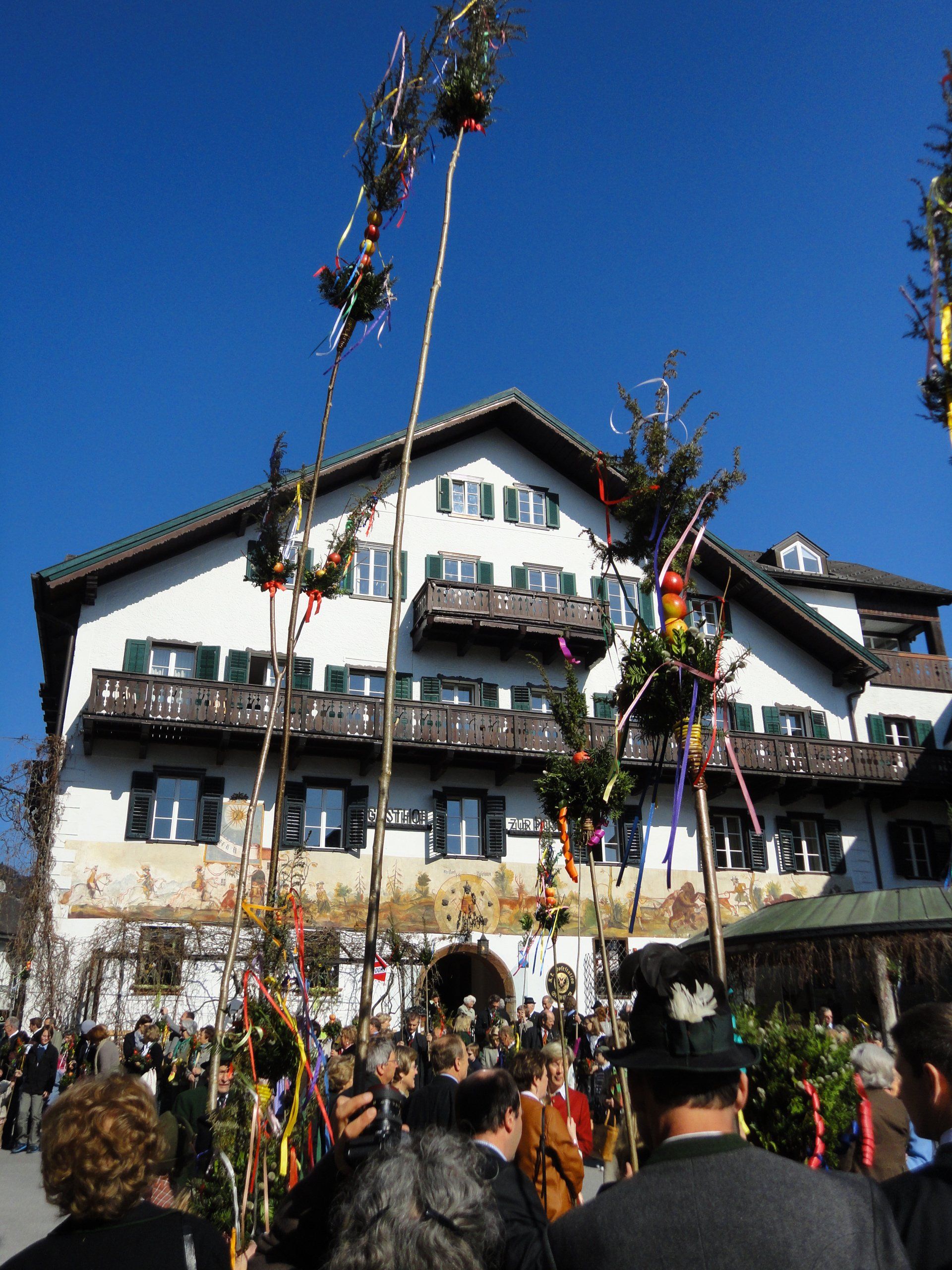
Another traditional festival is "Liebstatt Sunday," celebrated on the fourth Sunday of Lent, which was introduced in the 17th century by the Corpus Christi Brotherhood of Gmunden. The "Liebstatt" was intended to be a sign of compassion towards the needy, who were invited to share a meal, in the sense of "confirming love." Today, people exchange gingerbread hearts, a custom particularly prevalent in Bad Goisern, Ebernsee, and some other regions of Upper Austria.

Corpus Christi

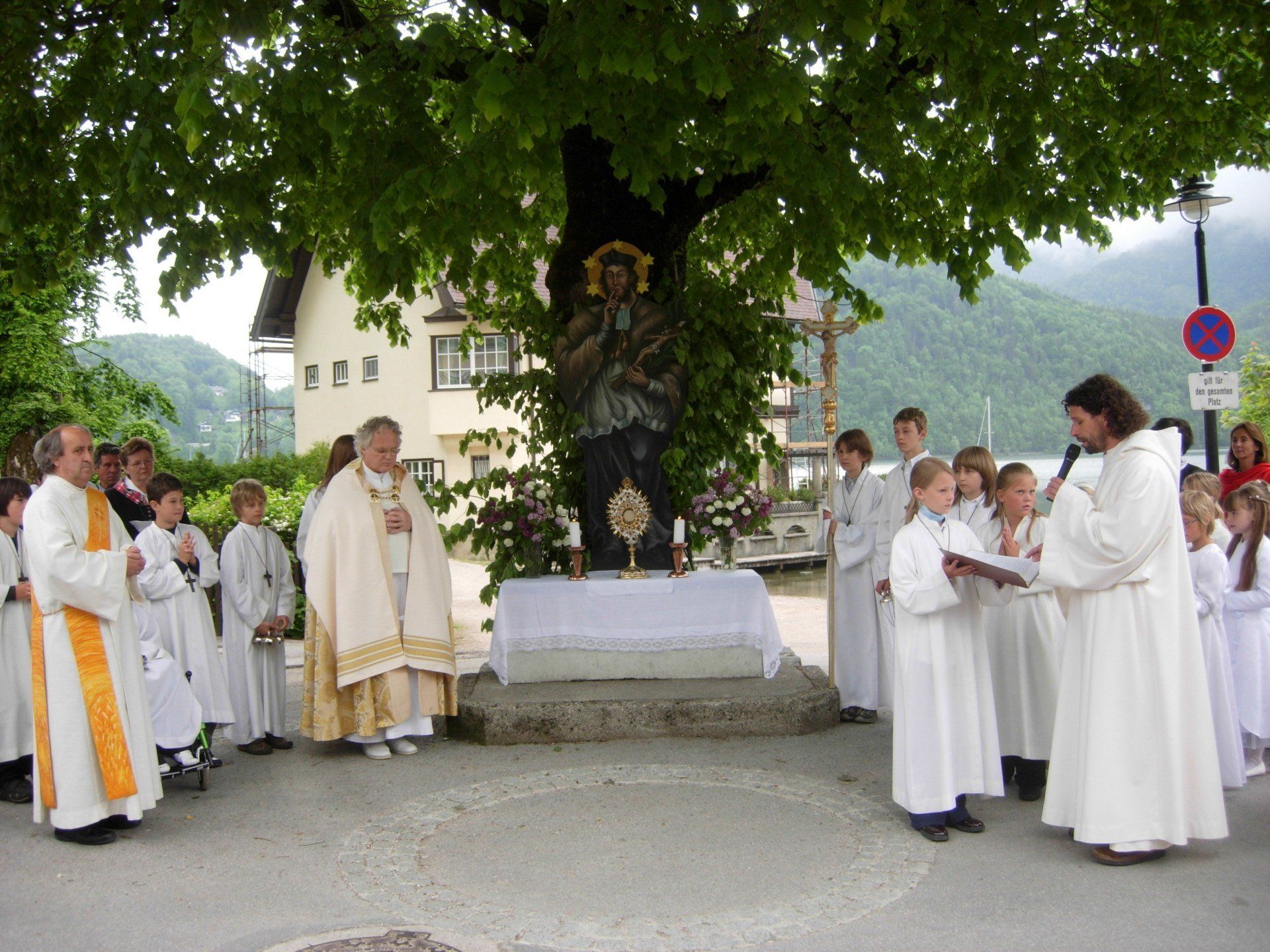
The Austrians celebrate Corpus Christi with great pomp and ceremony. The famous water processions in Hallstatt and on Lake Traunsee are particularly worth seeing, when festively decorated boats row the priest out onto the lake, in the middle of which the blessing of the Hallberg hill takes place. The ceremony is accompanied by music and the ringing of bells.

Shooting tradition

The people of the Salzkammergut region proudly uphold their old shooting tradition. Thus, in mid-October each year, at the end of the shooting season, a lavish festival with regional delicacies takes place.


traditional costume

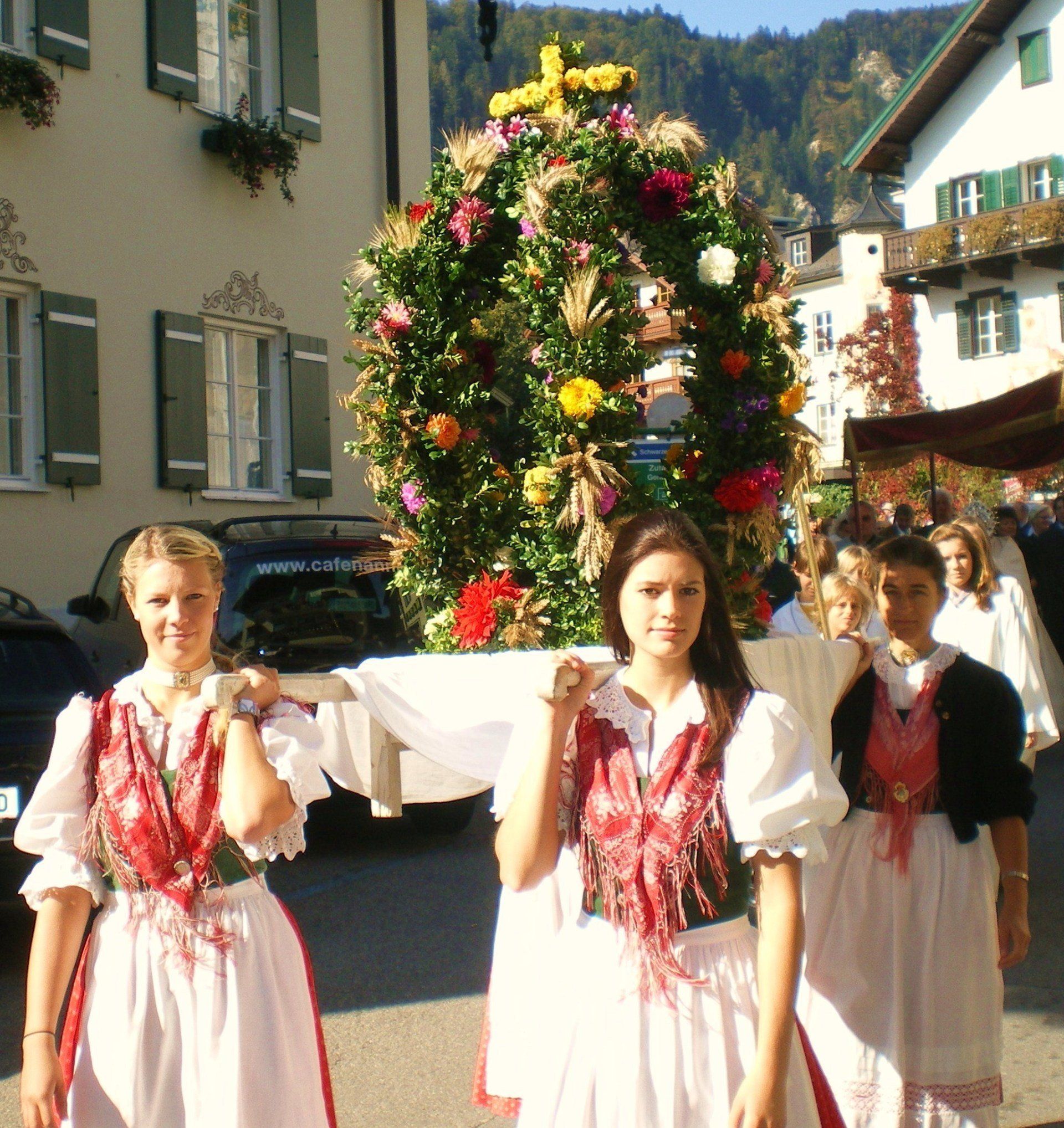
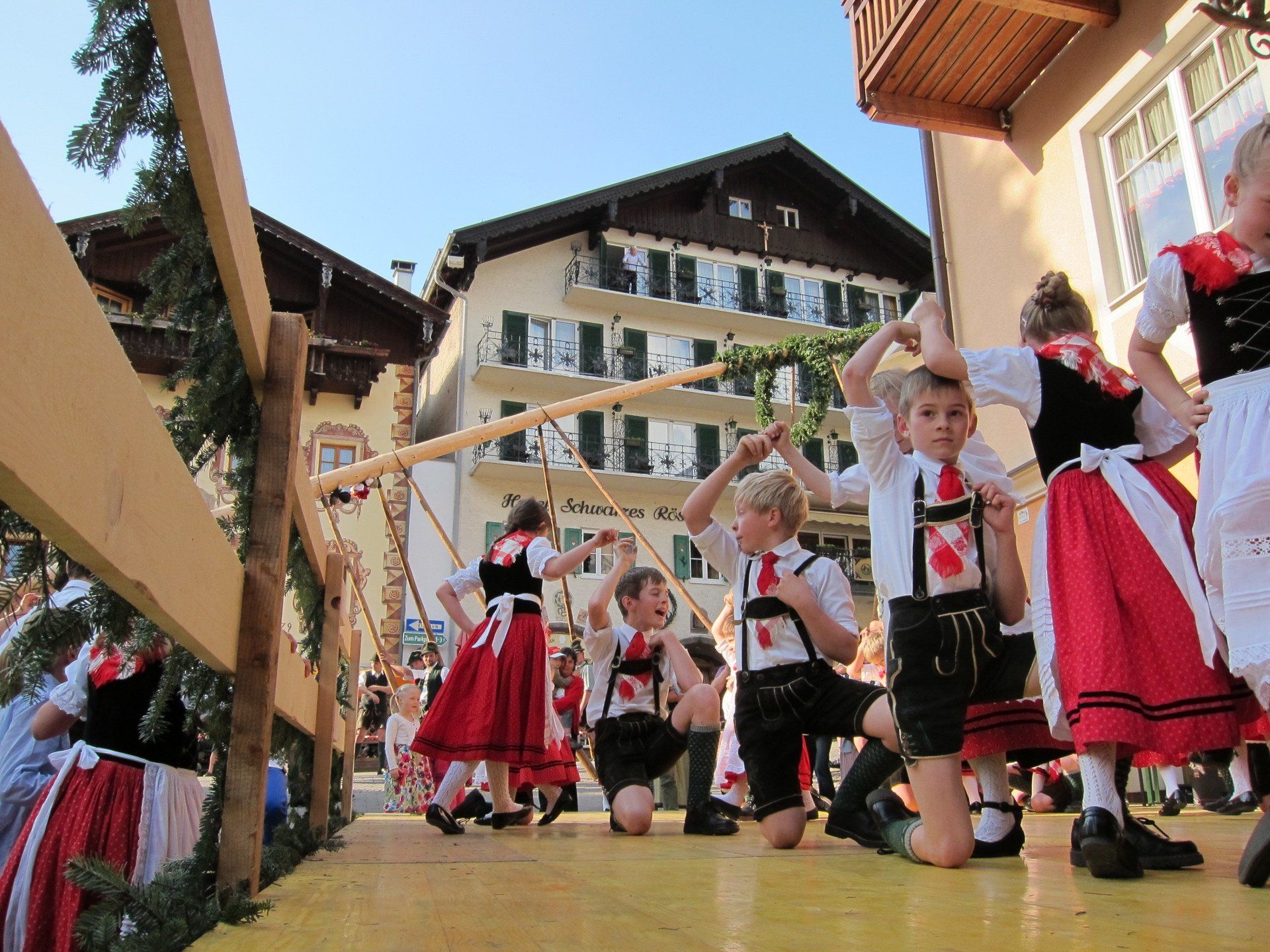
Traditional costumes typical of the Salzkammergut region are an integral part of living customs. Emperor Franz Joseph I contributed significantly to the widespread popularity of these costumes. Since he enthusiastically wore lederhosen, a loden coat, and a Styrian hat complete with a chamois beard during his holidays in Bad Ischl, high society began to follow his example. The ladies, in particular, wore the Salzkammergut dirndl, which is especially vibrant in green, pink, red, and purple. A black silk apron is also an essential part of the outfit. The neckline is round on all variations except the Anna Plochl dirndl, which is now considered festive attire.


The wearing of traditional costumes is also part of the local customs. Typical for the dirndl in the Salzkammergut region is the color green in combination with pink, red, and purple, while the men wear dark leather breeches with predominantly green stockings and loden jackets.

In summary, it can be said that whether it's traditional folk music, a dance accompanied by the rhythmic clapping in dialogue, or the colorful spectacle of the cattle drive – the cheerful and warm-hearted people in Austria and especially in the Salzkammergut know how to shape and enjoy life in its originality and diversity.


Animals are part of life in the countryside.
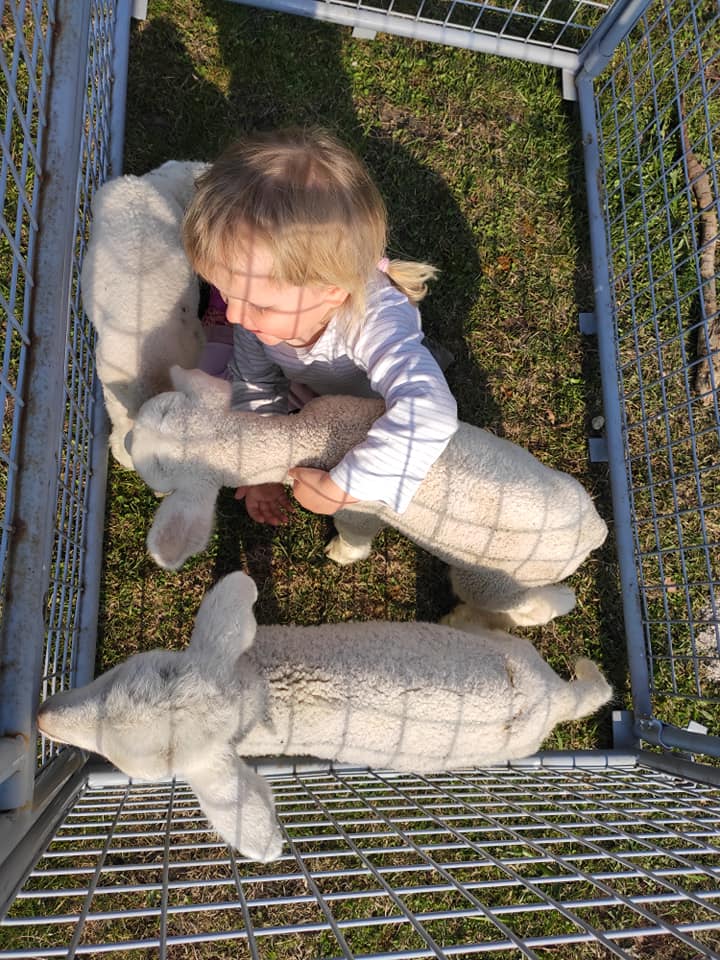
One of the best things about a holiday on a farm – especially for children – is undoubtedly the animals. Cats, dogs, rabbits and hares: For everyone who can't keep pets in their cramped city apartment, these "little creatures to pet" are something very special.

No less interesting, however, are farm animals, especially cattle and pigs, goats and sheep. While they may not be quite as cuddly, they form an essential basis for the lives of all people, whether as consumers or producers.

The close relationship between humans and animals is what makes a farm what it is. From this interaction spring countless exciting stories waiting to be discovered and experienced; stories that can help raise awareness of nutrition, nature, and the environment.

Cuddling allowed!
For farmers, livestock is naturally the main focus, as it's how they earn their living. But a farm isn't just populated by cattle and pigs; to the delight of young and old alike, it's also home to numerous animal species that are much more approachable, even though we don't yet have rabbits, dogs, or cats. Our sheep have been part of the FiSCHERGUT farm for about 30 years and ensure that there's plenty of opportunity for petting.