Customs and traditions.
Customs and traditions in the Salzkammergut region.
The Salzkammergut region is not only incredibly scenic, but also rich in both old and new customs and traditions. Throughout the region, great importance is still placed on keeping these traditions alive. In this way, customs are effectively prevented from dying out and valuable intangible cultural heritage is preserved.
As in other regions, the customs of the Salzkammergut are based on the cycle of the year, which has always shaped the lives of the rural, farming population. As such, they are a cultural asset of inestimable value, bridging the gap between past and present. The Salzkammergut is particularly known for its loving preservation of its diverse customs. The people here are proud to possess such a rich intangible cultural heritage and are aware of their responsibility towards it. Thus, the preservation of this cultural treasure not only benefits the local population but also provides visitors with a vivid impression of the region's culture.
Glöcklerlauf
Austrians are a people who cherish their traditions throughout the year. The festivities begin with the Glöcklerlauf, when, starting on the last of the twelve nights of Christmas on January 5th, the so-called Schön-Perchten, the benevolent light spirits, roam the countryside to drive away the evil spirits of winter. The costumes worn by the men in this custom vary from region to region. In the Salzkammergut, where the Perchten are called Glöckler, strikingly large, pointed, and intricately crafted hats, illuminated from within, adorn their heads, while a heavy belt of bells completes their white robes.
Love Sunday
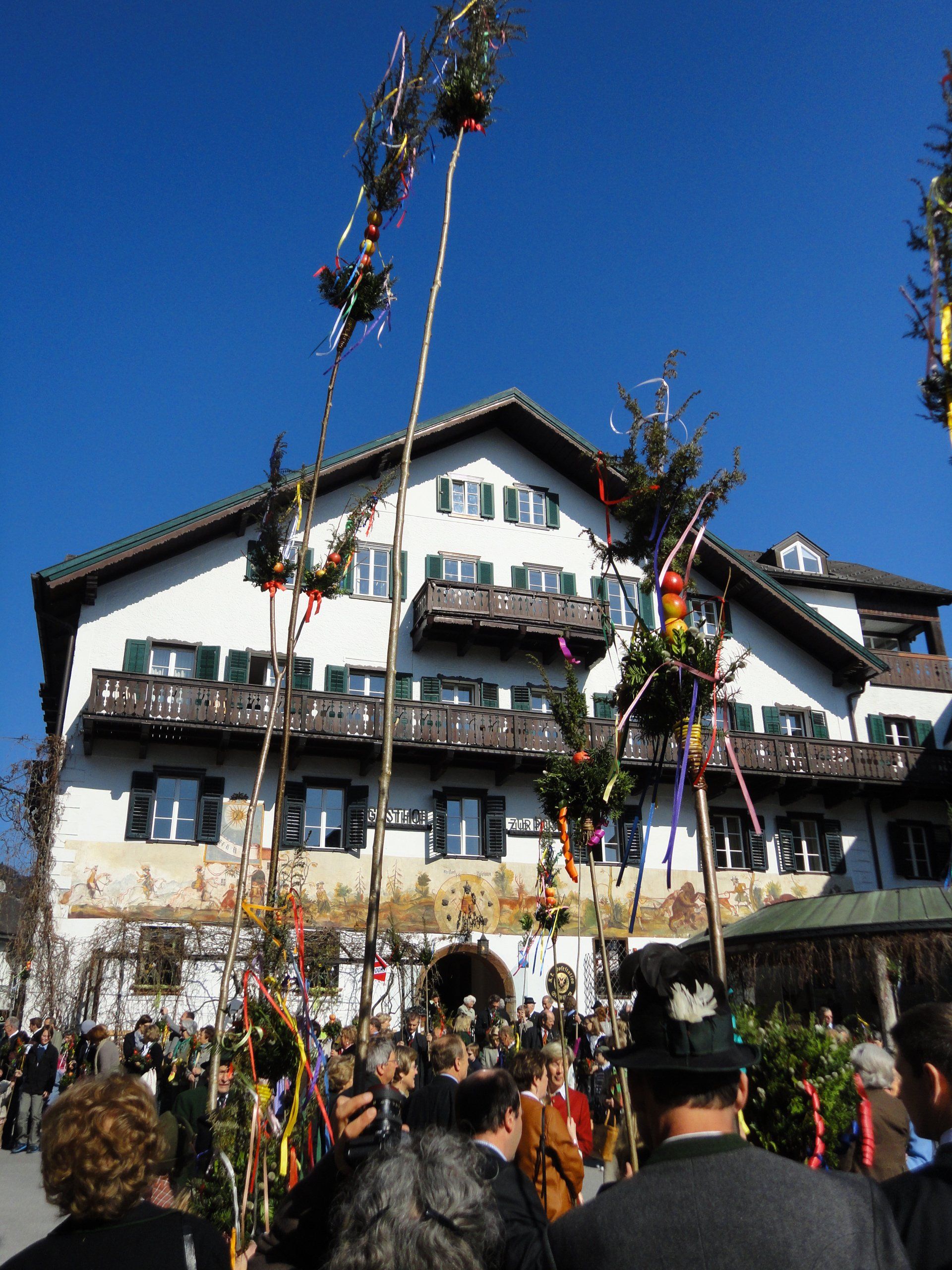
Another traditional festival is "Liebstatt Sunday," celebrated on the fourth Sunday of Lent, which was introduced in the 17th century by the Corpus Christi Brotherhood of Gmunden. The "Liebstatt" was intended to be a sign of compassion towards the needy, who were invited to share a meal, in the sense of "confirming love." Today, people exchange gingerbread hearts, a custom particularly prevalent in Bad Goisern, Ebernsee, and some other regions of Upper Austria.
Corpus Christi
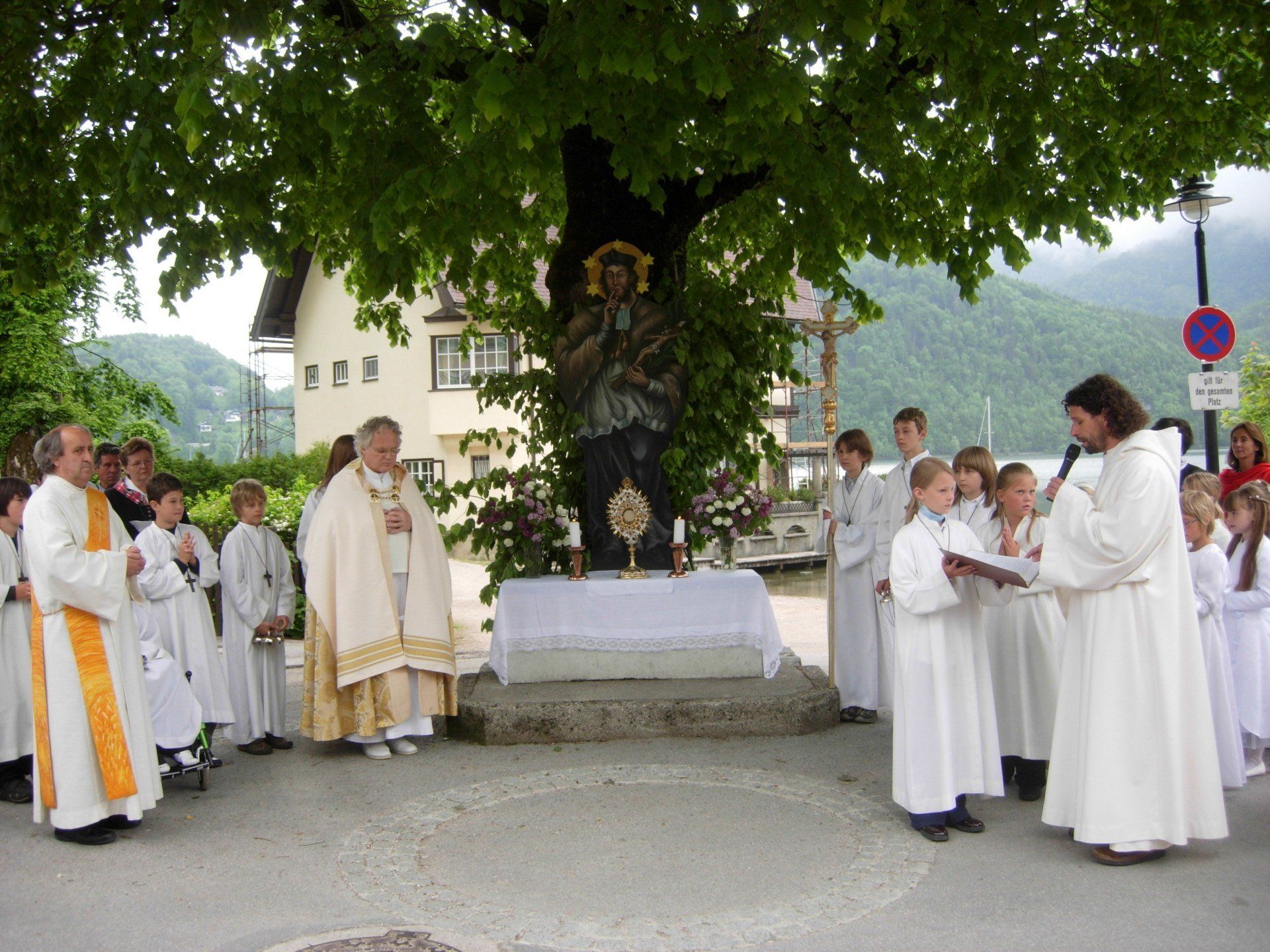
The Austrians celebrate Corpus Christi with great pomp and ceremony. The famous water processions in Hallstatt and on Lake Traunsee are particularly worth seeing, when festively decorated boats row the priest out onto the lake, in the middle of which the blessing of the Hallberg hill takes place. The ceremony is accompanied by music and the ringing of bells.
Shooting tradition
The people of the Salzkammergut region proudly uphold their old shooting tradition. Thus, in mid-October each year, at the end of the shooting season, a lavish festival with regional delicacies takes place.
traditional costume
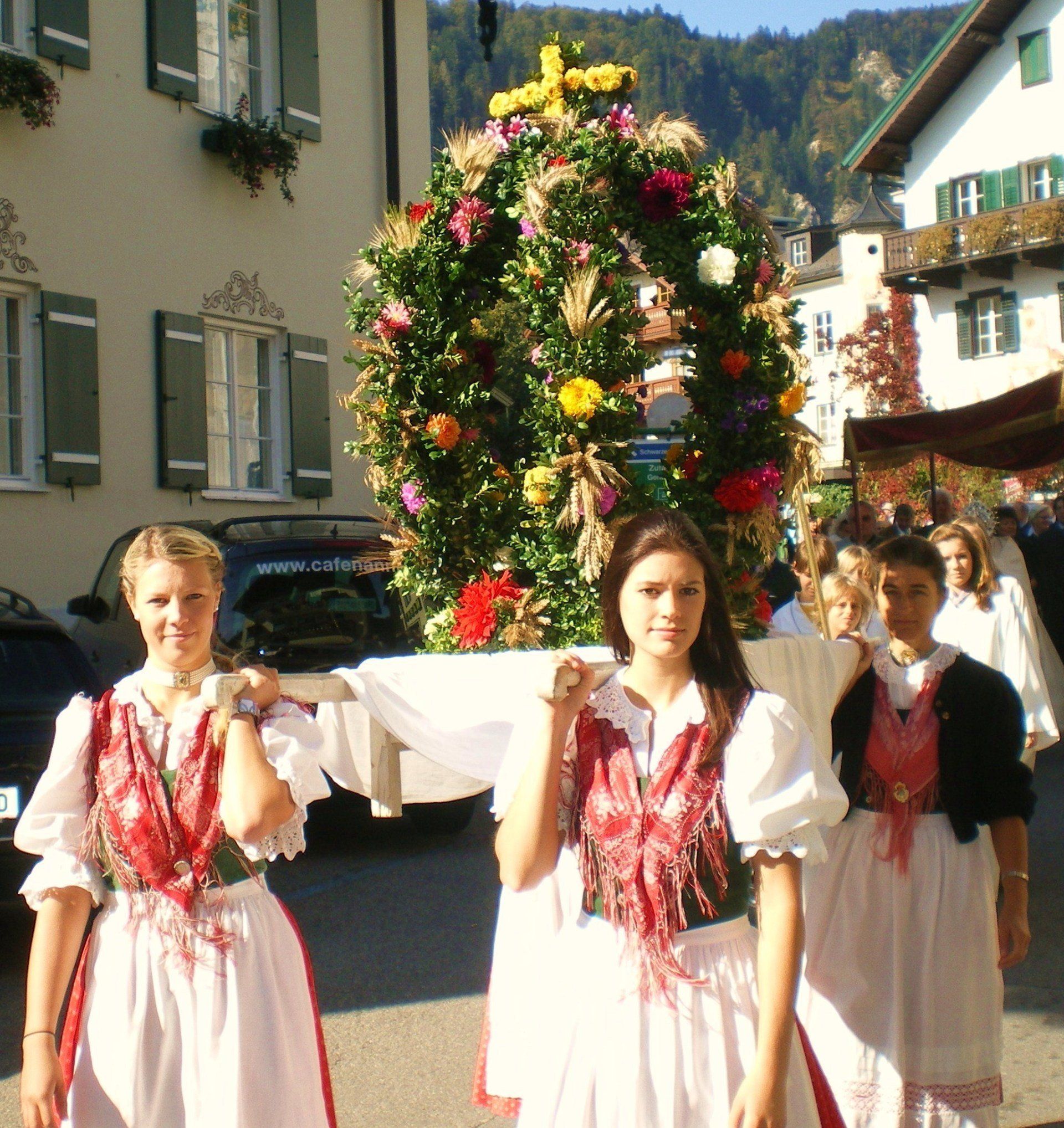
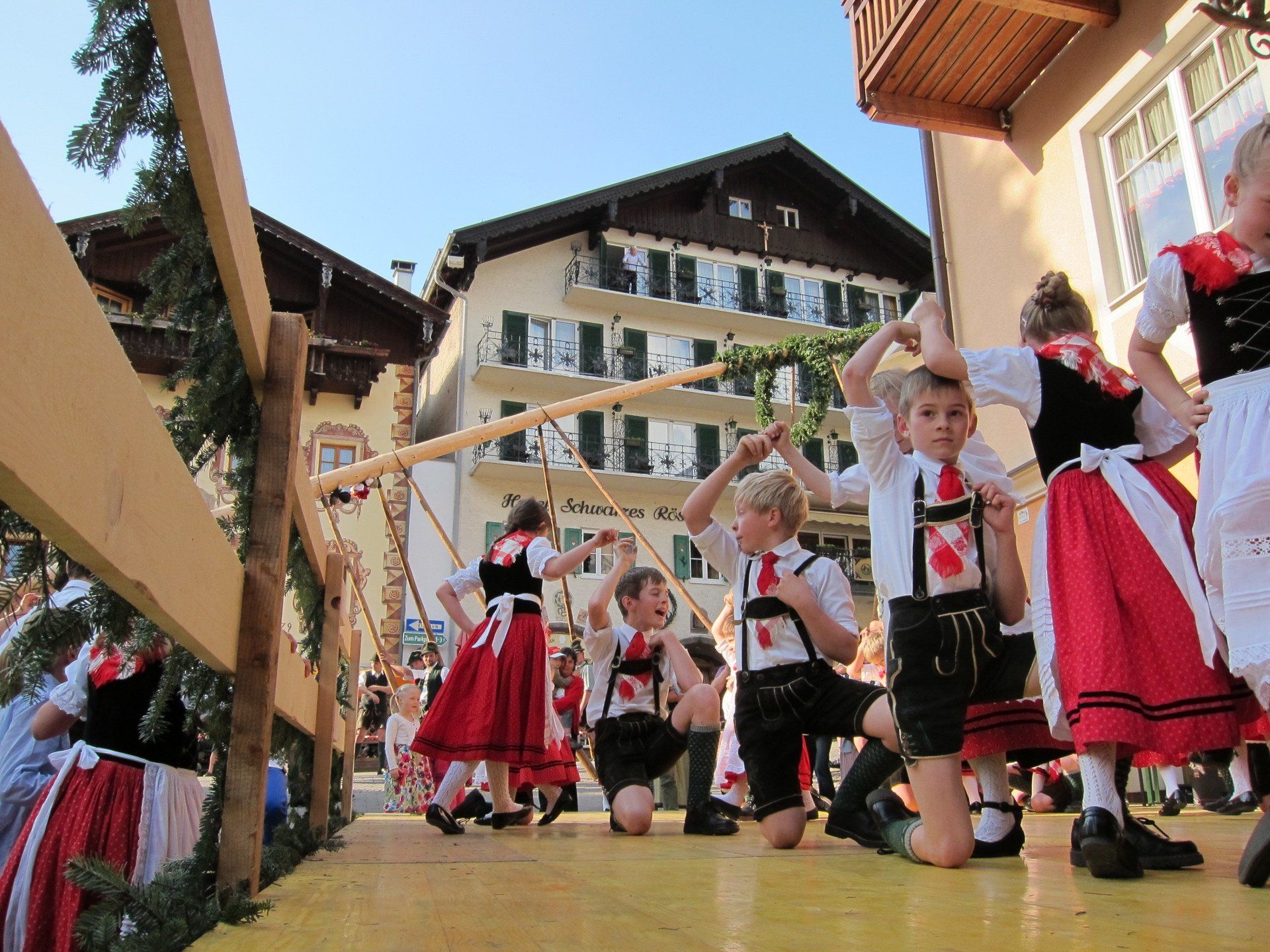
Traditional costumes typical of the Salzkammergut region are an integral part of living customs. Emperor Franz Joseph I contributed significantly to the widespread popularity of these costumes. Since he enthusiastically wore lederhosen, a loden coat, and a Styrian hat complete with a chamois beard during his holidays in Bad Ischl, high society began to follow his example. The ladies, in particular, wore the Salzkammergut dirndl, which is especially vibrant in green, pink, red, and purple. A black silk apron is also an essential part of the outfit. The neckline is round on all variations except the Anna Plochl dirndl, which is now considered festive attire.
The wearing of traditional costumes is also part of the local customs. Typical for the dirndl in the Salzkammergut region is the color green in combination with pink, red, and purple, while the men wear dark leather breeches with predominantly green stockings and loden jackets.
In summary, it can be said that whether it's traditional folk music, a dance accompanied by the rhythmic clapping in dialogue, or the colorful spectacle of the cattle drive – the cheerful and warm-hearted people in Austria and especially in the Salzkammergut know how to shape and enjoy life in its originality and diversity.
Animals are part of life in the countryside.